Three Seconds of Nothing: Confessions From the Gap Between the Last Bow and the Bar
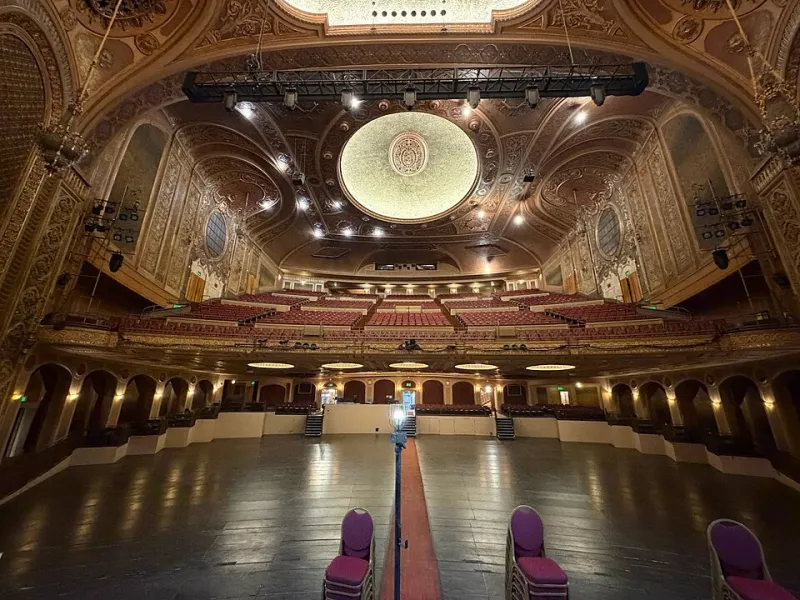
Photo: Avacado-pie, CC0, via Wikimedia Commons
There's a moment in every performance that never makes it into the reviews, never appears on the showreel, and never gets discussed in the green room afterwards. It's the gap. The few seconds after the lights snap down on the bows but before anyone — cast, crew, audience — quite remembers what they're supposed to be doing next.
I've stood in that gap hundreds of times now, in provincial rep, in fringe venues above pubs, in a tent in Guildford once, and I can tell you it's the oddest place in theatre. You're still technically 'on'. Your face is still doing the thing. But the play is finished, the story's over, and nobody has given you permission to be a person again.
The Face Doesn't Know It's Over
Here's what nobody tells you: your body takes longer to clock off than your brain. I've done final bows where I've been mentally writing my Tesco list while my face beams gratitude at row F. There's a specific smile — you'll know it if you've seen amateur theatre — that says I am performing happiness rather than I am happy. It's the smile of someone whose contract ends when the house lights come up, not a second before.
And the audience is in a similar limbo. They've stopped clapping, or they're clapping out of politeness, or they're the one person still clapping and now they've noticed everyone else has stopped and they can't work out how to stop gracefully. I've watched a man in Norwich applaud alone for a full eight seconds — an eternity, in applause — and I've never respected an audience member more.
What You Hear in the Silence
The gap is when the auditorium tells you the truth. All night you're guessing at the response — are they with us? Is that cough boredom or a bit of a cold? — but in those three seconds, as people gather coats and phones, you hear everything.
I once stood frozen mid-bow and heard a woman behind me say, clearly, "Well, I believed her." Reader, I have lived off that sentence for six years. I don't know which character she meant. I don't care. On a bad night, I've heard worse — a sigh, a phone buzzing, a teenager asking "is that it?" in the wounded tone of someone who's been personally shortchanged — and those stick too. The gap doesn't flatter you. That's why I love it.
Backstage is no more dignified. The instant the blacks close, the spell breaks in different ways for different people. One actor is already crying, quietly, the way you do when you've been holding a feeling in a corset for two hours. Another is immediately furious about a missed cue in Act Two. Our sound op once said "cheers, loves" into the tannoy before we'd finished bowing, which is the most honest piece of theatre I've ever been part of.
The Most Honest Three Seconds
I've come to think of the gap as the only moment in the whole evening when everyone in the building is telling the truth at the same time. The actors are too tired to pretend. The audience thinks the performance is over, so they stop performing being an audience. For a few seconds, it's just a room full of strangers who've been through something together, working out how to leave.
It's also, if I'm honest, the moment I judge my own work. Not the reviews, not the notes from the director — the gap. If I walk off buzzing, something happened. If I walk off rehearsing my apology, something didn't. It's the fastest review I'll ever get, and the only one I fully trust.
So next time you're at the theatre and the bows end and there's that strange, shuffling half-second before everyone remembers to move — enjoy it. You're seeing the business with its shoes off. And if you happen to spot an actress on the third row of the bow line grinning like her life depends on it while clearly thinking about a meal deal: that's me. I believed you, too.