Forty Minutes to Save the Show: The Night I Went On With a Safety-Pinned Costume and No Script in My Hand
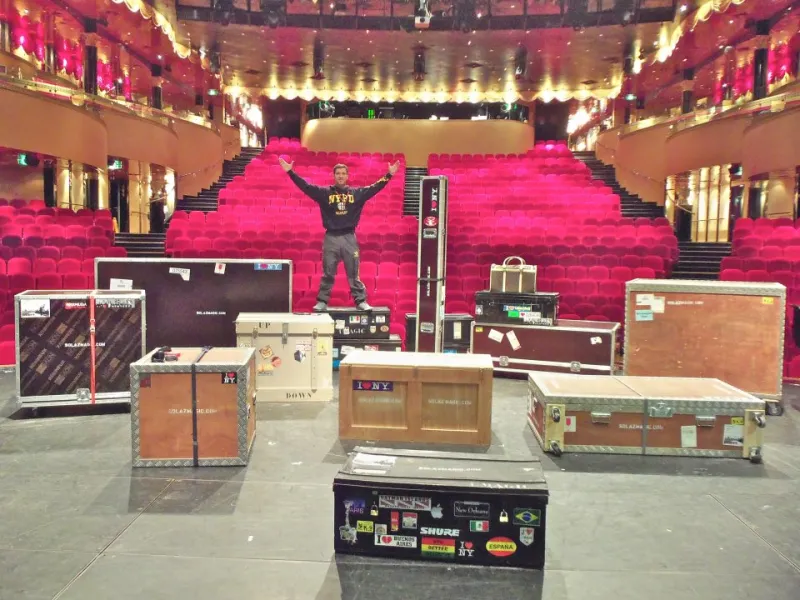
Photo: JackBrazil, CC BY-SA 4.0, via Wikimedia Commons
There's a moment every understudy both dreams about and dreads: the phone call. Except nobody phones you. You just see the stage manager walking towards you with a face like a dropped trifle, and you know. You just know.
Mine came on a wet Wednesday in February, in a regional theatre that shall remain nameless but rhymes with 'grim'. Forty minutes to curtain. The lead had eaten a prawn sandwich from the petrol station opposite the multi-storey car park, and her body had filed a formal complaint.
No Notes, No Warm-Up, No Time To Panic Properly
Here's what people think being an understudy involves: months of sitting in the wings, script on your lap, waiting.
Here's what it actually involves: you watch every rehearsal from the side of the room with your arms crossed, you learn the role on top of your own smaller part, you rehearse it maybe twice with the full company — usually on a Sunday when everyone's knackered — and then you're expected to reproduce a performance the lead has spent six weeks building.
So when the call came, I had roughly the time it takes to watch an episode of Countdown to become someone else entirely.
The costume didn't fit. Of course it didn't. The lead was two inches shorter and considerably more generous in the bustle department, so the wardrobe department descended on me like a very calm, very sweary pit crew. Pins. So many pins. There is a version of that dress held together entirely by safety pins and prayer, and I was wearing it.
My warm-up was running on the spot in the wings while the stage manager read me my own cues like a bingo caller. My vocal warm-up was a hum and a panic. My emotional preparation was none. There was no time.
The Performance I Can Barely Remember
People ask what it felt like to go on. Honestly? Like being fired out of a cannon into a play.
The first act is a blur. I know I hit my marks because the DSM told me afterwards that I did, and I trust her more than I trust my own memory. I know there's a moment in Act Two where I skipped an entire page of dialogue — and here's the mad thing: my fellow actors, God bless them, folded it back in around me like nothing happened. That's the bit nobody tells you about. The cast don't just watch you, they carry you. Every glance, every pause, every gentle repositioning towards the right mark. It's the most generous thing I've ever been part of.
The audience, bless them, were told before curtain that I wasn't the intended leading lady. And a funny thing happens when a regional audience knows that: they root for you. There was a woman in row F who gave me a thumbs up at the interval. A THUMBS UP. I rode that thumbs up all the way to the final bow.
By the end, I got a proper ovation — the kind with whooping in it — and I cried in the wings like a big emotional idiot while still wearing a dress that was 40% pins.
The Aftermath Nobody Mentions
Here's the bit that doesn't make the feel-good news story. The next night, the lead was back. Better, rested, wonderful. And I went back to my smaller part, back to the wings, back to watching from the side of the room with my script on my lap.
Nobody claps for that. There's no ovation for the person who goes back to being ready. And that's the actual job, isn't it? The glory night is one night. The being ready is forever.
I've been an understudy more times than I've been the lead, and I'll tell you what I've learned: understudies are theatre's most prepared and least thanked professionals. They know the show better than anyone — because they have to hold it and their own part in their heads simultaneously. They're on a retainer of attention that never switches off. When they go on, they're not covering a role; they're rescuing an evening for eight hundred strangers.
So the next time you're at the theatre and the front-of-house announcement says someone is 'tonight playing the role of' — give that announcement a little clap. Go on. It feels mad, but do it. Somewhere in the dressing room, a person covered in pins just exhaled for the first time all day.
And to the lead who ate that sandwich: I've never told you this, but thank you. Terrible seafood aside, you gave me the best and hardest night of my career. I still keep one of the safety pins in my dressing box. Superstition, innit.