Everyone in the Dog & Duck Has Seen Me Die Badly on Stage: The Curse of the Hometown Audience
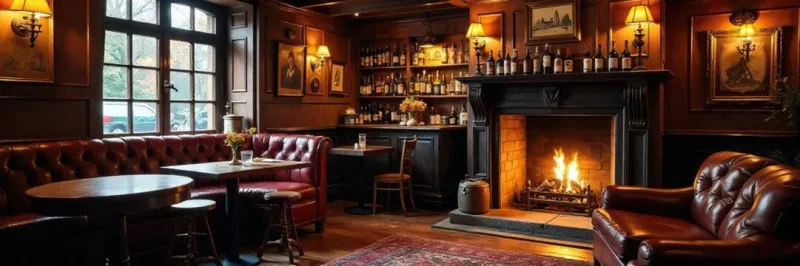
Photo: cozy traditional British pub interior warm lighting, via t3.ftcdn.net
Every British actor has one. A pub, a chip shop, a bus stop — some unremarkable patch of your hometown where you are not, and will never be, a professional. You're just Sophie from year eleven, the one who did that thing in the school hall that everyone still brings up.
Mine is the Dog & Duck. Lovely boozer. Decent roast. Landlady who remembers everyone's order. And the scene of the single worst performance of my entire career, which happened when I was seventeen and convinced that my showcase monologue — something from a Shaffer play I absolutely did not understand — was going to change lives.
It did not change lives. It changed the Dog & Duck forever.
The Night Everyone Remembers
Here's the thing about hometown showcases: nobody in the audience is a casting director. Nobody is a critic. It's your mum's friends, your next-door neighbour, the lad you did your paper round with, and a man called Trev who's there because it's Tuesday and Trev is always there.
I forgot my line about forty seconds in. Not stumbled — properly lost. And in the void where the line should have been, my brain served up something truly unforgivable, which I said out loud, to a room containing my old maths teacher.
I won't tell you what it was. I'll just say that to this day, if I walk into the Dog & Duck, someone will nudge someone else, and Trev will raise his pint, and I will know exactly what they're thinking about.
Twenty years. Twenty years of credits, of four-star reviews, of actual telly work — and in that pub, I am a monologue and one terrible ad lib.
The Rules Nobody Writes Down
There's an unwritten rule in this industry that you never work too close to home, and I think it exists for exactly this reason. Acting works because of a contract between you and the audience: they agree to believe, and you agree to be someone else. But the people who watched you grow up can't sign that contract. They've already seen you crying in a school corridor over a GCSE. They know the person, so the person keeps leaking through.
I did a pantomime in my hometown a few years back — good money, easy commute, seemed sensible. And it was lovely, mostly. But during the slosh scene, I caught the eye of a woman who used to run the Brownies, and for one horrifying second I was eight years old again, holding a puppet in a church hall. The fourth wall didn't just crack. It fell on me.
The Other Side of the Coin
And yet. And yet.
Filming near home is a comfort no London location can match. It's your nan turning up with a flask. It's a costume assistant saying "alright, Soph?" before you've given your name. It's the sheer, unglamorous joy of sleeping in your own bed between takes instead of a Travelodge with a broken radiator.
There's also something quietly brilliant about the hometown audience itself. They're honest in a way London crowds aren't. A West End audience politely withholds. A hometown crowd roars with laughter at the wrong moment and tells you afterwards exactly which bit of your performance reminded them of your dad. That's data you can't buy.
And honestly? Being known for who you were at school, rather than what you've done since, is its own strange gift. There's no performance to maintain. No mystique. Trev doesn't care about my agent. Trev cares that I still owe him a pint from 2009.
My Verdict
So here's my position, for what it's worth: never work in your hometown if you can help it. Work there every chance you get. Both things are true, and every British actor who's ever sweated through a monologue in front of their old dinner lady knows it.
The Dog & Duck will never see me as anything but seventeen and flailing, and that's mortifying. But it's also the only room in the country where I don't have to be anyone at all.
I'll raise a glass to that. Just not in there. Not yet.